
Dentures
in Henderson, Nevada
Comfortable tooth replacement, so you can chew well and smile with confidence
Losing several teeth, or all of them, changes more than your smile. Eating gets harder, and some people start avoiding photos or even conversations. Dentures can help. At Pecos Dental in Henderson, Nevada, we work with patients to find a set that fits their mouth and their routine.
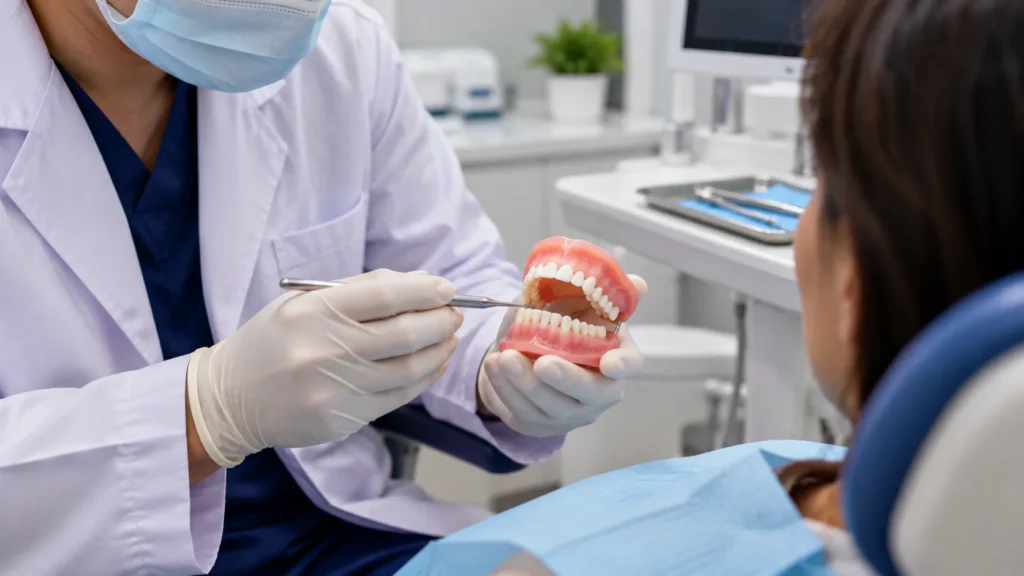
Dentures at Pecos Dental
Dentures are replacement teeth. Artificial teeth are set into a gum-colored base that either rests on your gums or attaches to dental implants. Depending on what you’ve lost, a denture may replace a few teeth or a whole arch.
We see patients from all over Henderson who want dentures, and we offer removable options as well as ones held in place by implants.
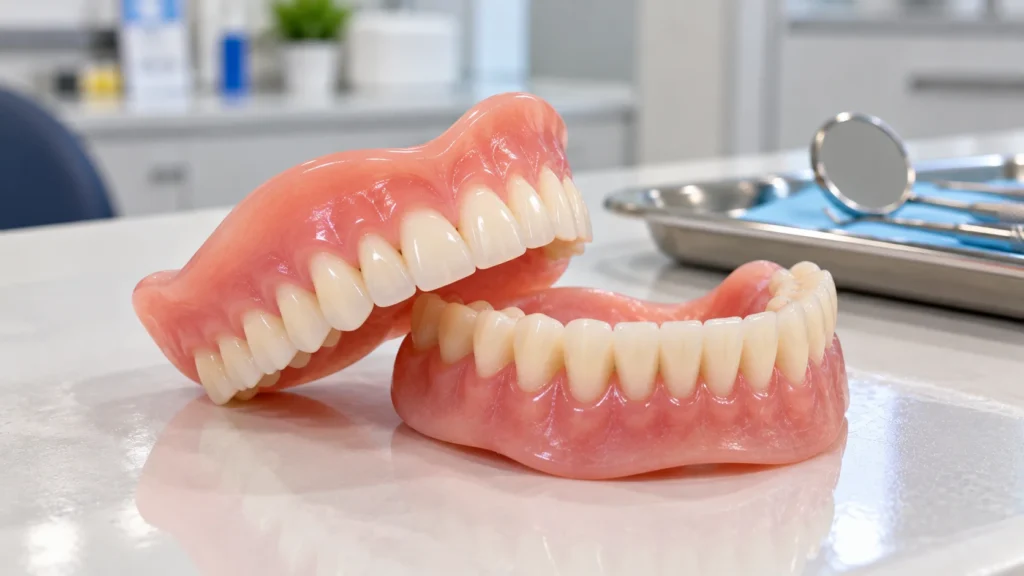
When Might You Need Dentures?
For most people, tooth loss builds up slowly until daily life starts to feel different. You may be a candidate if you:
- Have lost several teeth, and the gaps are getting in the way
- Have lost all of your upper or lower teeth
- Struggle to chew certain foods
- Notice some words sound different than they used to
- Feel your lips or cheeks look sunken without teeth to support them
- Wear old dentures that have become loose or sore
We’ll need to examine your mouth before we can say whether dentures are the right call.
Types of Dentures
There’s no one best choice. It depends on how many teeth are missing, the health of your gums, the condition of your jawbone, and your preferences. We’ll go through it together at your visit.
Complete Dentures
Complete dentures replace every tooth on the top, the bottom, or both. They rest on your gums and can be taken out. They’re meant for people who have no natural teeth left in the arch being treated.
Partial Dentures
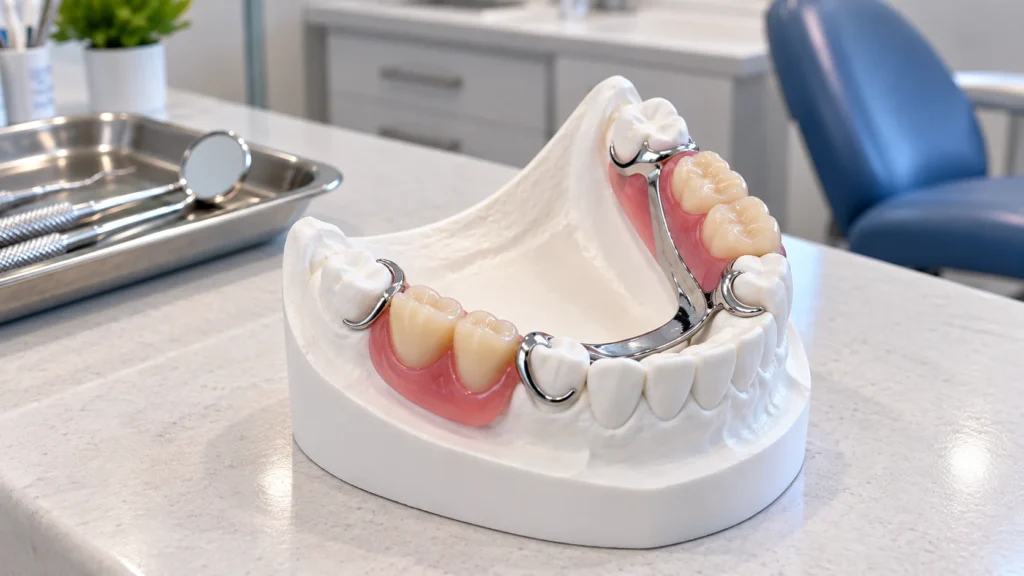
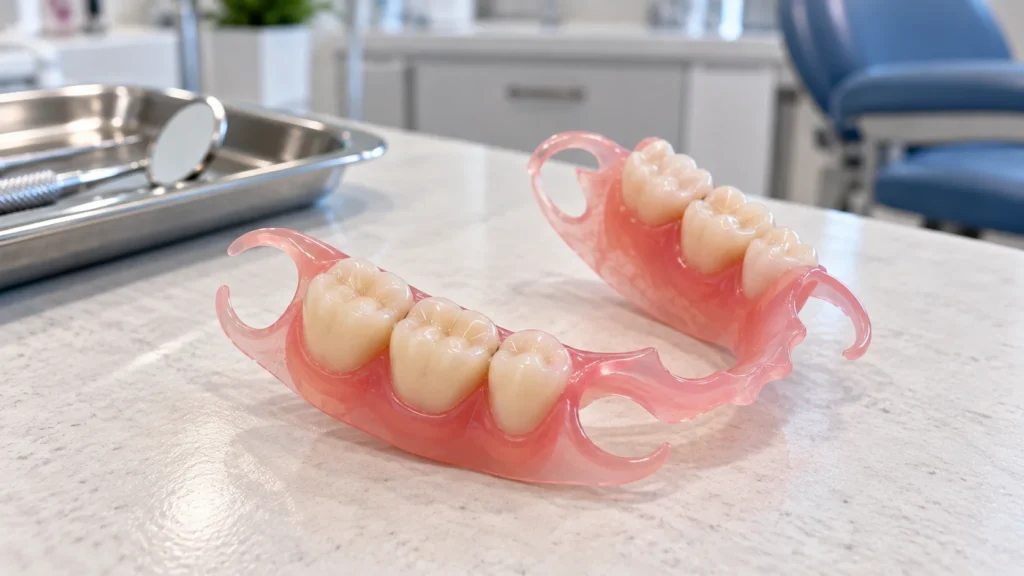
If you still have some of your teeth, partial dentures fill in the gaps around them. Small clasps or other attachments usually hold them in place. They bring back your chewing and close up the spaces in your smile.
Implant-Supported Dentures
Here, dental implants give the denture something solid to hold onto, so it often feels steadier than a regular removable set. Some versions come out for cleaning, and others stay fixed. Whether you’re a good fit depends on your jawbone and overall oral health. You can read more on our dental implants page.
Immediate Dentures
We place these right after your teeth are removed, so you’re not without teeth while you heal. Your gums and bone change as they settle, so the denture will likely need adjusting or replacing later. If extractions are part of your plan, our tooth extraction page covers that step.
Benefits of Wearing Dentures
Dentures aren’t the same as natural teeth, but they solve real everyday problems. Depending on the type, they can:
- Replace a few teeth or a full set
- Make chewing easier
- Help with speech if tooth loss changed it
- Give your smile and lips more support
- Come in designs chosen around your needs
Removable ones are also easy to take out and clean. How well they work comes down to a good fit, adjustments when needed, and daily care.
What Happens During The Denture Fitting Process?
The steps change a little depending on whether you’re getting conventional, immediate, or implant-supported dentures. In general, it goes like this:
- Exam and consultation. We look at your gums, remaining teeth, jawbone, and overall oral health.
- Choosing a denture. We go over the options that suit you and answer your questions.
- Impressions or scans. We take measurements of your mouth so the denture fits properly.
- Try-in. You may wear a trial version so we can check the look, bite, and comfort.
- Final placement. We make sure it fits well and adjust anything that feels off.
- Care and follow-up. We show you how to wear and clean your dentures, then schedule a check-in.
Getting Used to Your New Dentures
Expect an adjustment period. Your mouth is getting used to something new.
- Speaking: Some words may come out odd at first. Reading out loud helps.
- Eating: Start with softer foods, then work up to firmer ones.
- Soreness: Mild rubbing or tenderness can happen early on.
- Fit: Follow-up adjustments often make a big difference.
If your dentures keep rubbing, slipping, or hurting, come back in. Please don’t just put up with it.
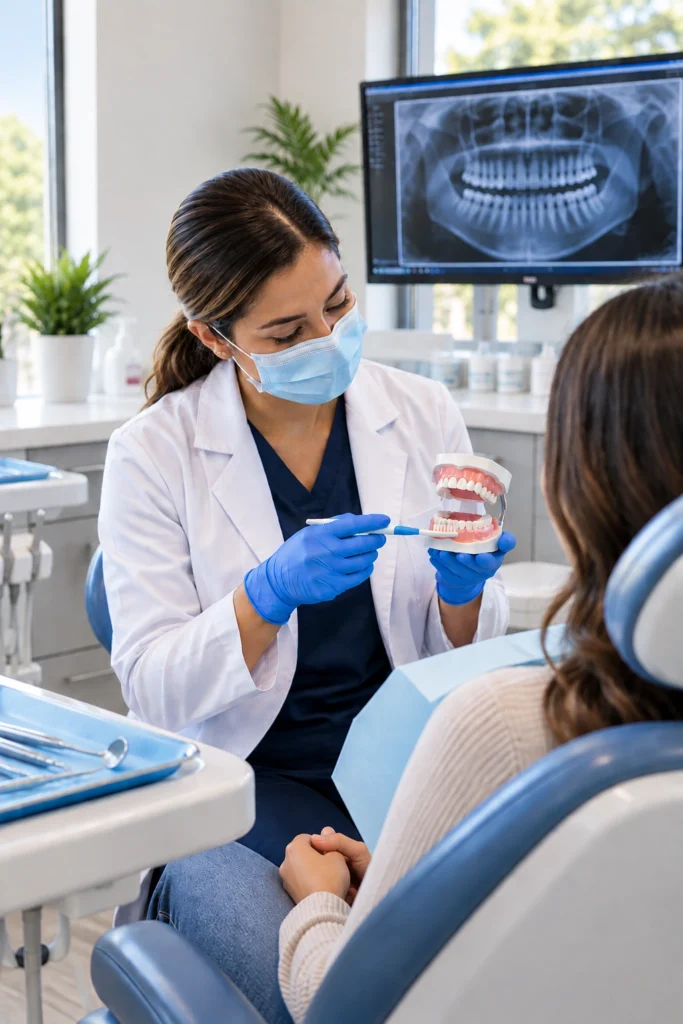
Denture Cleaning and Care
Good denture cleaning and care is simple, but it has to happen every day. Food builds up on dentures the same way it does on teeth.
- Take removable dentures out and brush them with a soft denture brush and a cleaner made for dentures.
- Rinse them after meals when you can.
- Brush your gums, tongue, and any natural teeth you have left.
- Store them the way we show you so they don’t dry out or get damaged.
- Skip hot water. It can warp some denture materials.
Implant-supported dentures may need a different routine, depending on whether they come out or stay fixed. We’ll show you what works for yours. Regular checkups let us look at the fit and condition too.
When Should Dentures Be Adjusted or Replaced?
Dentures aren’t the same as natural teeth, but they solve real
Gums and jawbone change over the years, so a denture that fit well at first can start to feel off. That’s why people sometimes need adjustments, a reline, repairs, or a new set. Make an appointment if:
- They slip or shift when you eat
- Your gums stay sore or irritated
- Chewing is getting harder
- You see cracks, chips, or broken pieces
- The fit feels different than before
- The teeth look worn or damaged
Please don’t try permanent repairs at home. It can make things worse and harder for us to fix.
frequently asked questions
Are Dentures Comfortable to Wear?
They can be once you’ve adjusted. A proper fit matters most, and small tweaks in the first few weeks often help.
Can I Eat Normally With Dentures?
Mostly, with some practice. Sticky, hard, or very chewy foods can be tougher to manage.
What Is the Difference Between Full and Partial Dentures?
Full dentures replace an entire arch of teeth. Partial dentures replace only the missing teeth and work around your natural ones.
Are Implant-Supported Dentures Better Than Regular Dentures?
They often feel more stable, but they need enough healthy bone and a different cleaning routine. Neither option is best for everyone.
Should I Remove My Dentures When Sleeping?
Removable dentures usually come out at night unless your dentist tells you otherwise. It gives your gums a rest.
How Often Should Dentures Be Cleaned?
Every day. It protects your gums and any natural teeth you still have.
Can Loose or Broken Dentures Be Repaired?
Sometimes. Many problems can be fixed with an adjustment or repair, while others call for a new set. We’ll take a look and tell you which it is.
Why Choose Pecos Dental for Dentures
We start by checking your gum health, your remaining teeth, and how your dentures fit. Then we explain your options and the upkeep that comes with each, so there are no surprises later. If you’re looking for dentures in Henderson, Nevada, our team at Pecos Dental will walk you through it.
Schedule your Denture Appointment
If you’re missing teeth or your current dentures just aren’t comfortable, come see us at Pecos Dental in Henderson, Nevada. An exam will show which options make sense for you. Contact us to set up a visit.
Book Your Appointment
By submitting this form, you agree to our Privacy Policy. This form is not for medical emergencies. Please do not include sensitive medical or personal health information in this form.